If you are looking at property in Studio City, an ADU-friendly lot can offer more than extra square footage. It can create flexibility for rental income, space for extended family, or a more marketable property when it is time to sell. In a high-value market where the median sale price is about $1.97 million and homes sell in around 60 days, understanding which lots are truly ADU-capable can help you make a smarter move. Let’s dive in.
Why ADU-friendly lots matter in Studio City
Studio City is not a one-size-fits-all market. The neighborhood sits within the Sherman Oaks, Studio City, Toluca Lake, and Cahuenga Pass Community Plan Area, and some parcels may also be affected by additional planning layers such as the Studio City and Cahuenga Pass Streetscape Plan, the Mulholland Scenic Parkway Specific Plan, or the Ventura/Cahuenga Blvd Specific Plan.
That matters because two homes on different streets can have very different ADU paths. A lot may look promising at first glance, but overlays, hillside rules, height limits, and site conditions can change what is realistic. In Studio City, parcel-specific review is essential.
The legal baseline for ADUs in Los Angeles
California has made ADUs much easier to build than many buyers and sellers realize. Under current state rules, local agencies cannot use minimum lot size requirements to block at least an 800-square-foot ADU with four-foot side and rear setbacks when other standards are met.
For single-family lots, one new detached ADU is allowed if it meets the applicable rules, including those four-foot side and rear setbacks. State guidance also limits how restrictive local size standards can be. In many cases, a detached ADU can be up to 1,200 square feet, while attached ADUs may be tied to the size of the main house but still cannot be reduced below certain state minimums.
Parking rules are often more flexible than expected. ADU parking cannot exceed one space per unit or bedroom, whichever is less, and parking can be waived in several situations, including some transit-related cases. If a garage or parking area is removed to make way for an ADU, replacement parking cannot be required.
That said, Los Angeles still reviews projects site by site. The city looks at zoning, land use, scale, height, setbacks, and any applicable overlay or specific plan. In Studio City, that local review is where lot quality really starts to separate itself.
What makes a lot ADU-friendly
Usable yard space
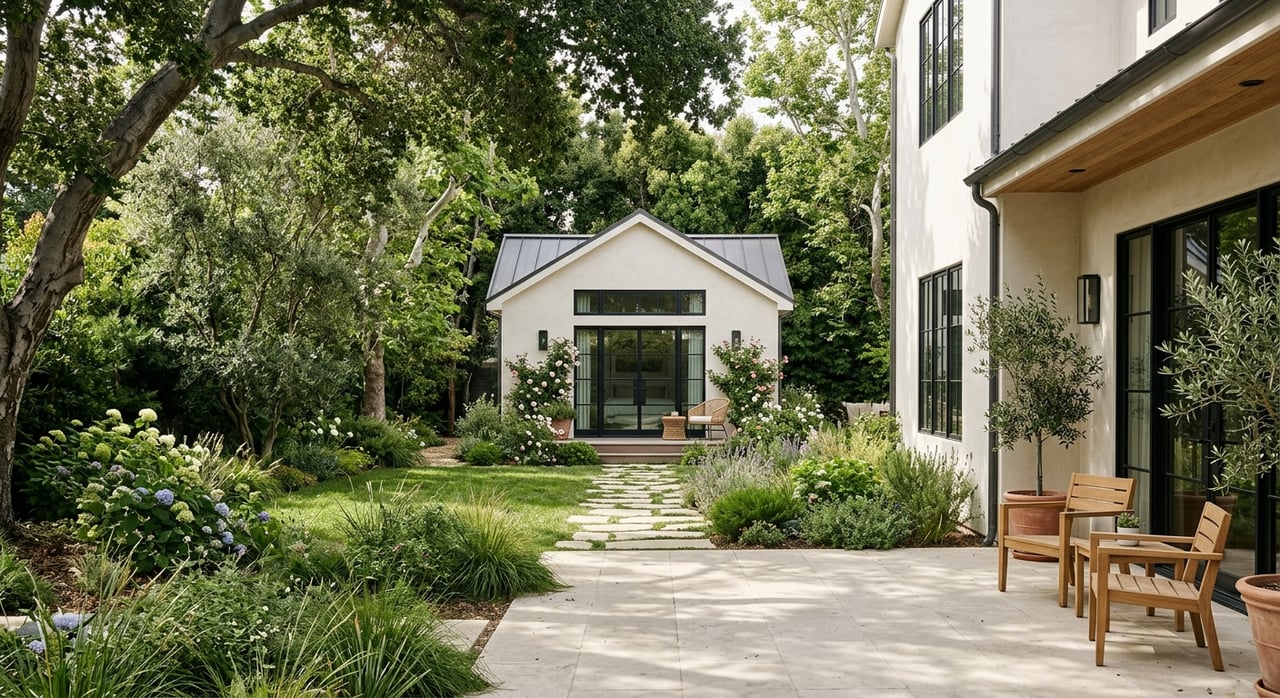
The easiest lots for a detached ADU usually have a functional rear yard or side yard with enough room to fit a second structure without making the site feel overbuilt. Width and depth matter because you still need to respect setbacks and work within the existing footprint of the main residence.
In practical terms, flatter and more regular-shaped lots are often easier to work with. A rectangular parcel with a clear backyard may offer a smoother path than a narrow, steep, or irregular lot.
Existing garages or accessory structures
One of the strongest ADU opportunities in Studio City is a property with an existing detached garage or accessory structure that may be converted. Conversions are often more favorable than brand-new detached construction because they may avoid some of the same design and setback challenges.
This is one reason older lots with detached rear garages can be especially appealing. If the structure is a good candidate for conversion, you may gain usable space with less zoning friction than starting from scratch.
Access and parking logic
Even when parking is reduced or waived, site access still matters. A lot with a practical driveway layout, alley access, or clear pedestrian route can be easier to plan and easier to use once the ADU is complete.
Transit can also be a meaningful advantage. State rules allow parking waivers in several situations, including some properties within one-half mile of transit, so location can improve the overall feasibility of an ADU plan.
Fewer overlay complications
Some of the most attractive ADU lots are simply the ones with fewer layers of complexity. In parts of Studio City, hillside rules, Very High Fire Hazard Severity Zone conditions, and specific plan requirements can create added questions.
That does not mean those lots are impossible. It means you should treat ADU potential as a property-level issue, not a neighborhood-wide assumption.
Why Studio City buyers care about ADU potential
In Studio City, ADU value is really about optionality. A legal second unit can create space for guests, adult family members, live-work needs, or rental income, all without requiring you to leave a neighborhood you already love.
Los Angeles city materials point to some of the main reasons owners build ADUs: rental income, private living space for family, and increased resale appeal. State housing guidance also recognizes ADUs as a practical tool for flexible living and aging in place.
That flexibility matches broader housing trends. More households are living in multigenerational arrangements than in the past, which helps explain why many buyers now place a premium on homes that can adapt over time.
How ADUs influence property value
This is where nuance matters. An ADU-friendly lot can improve a property’s appeal, but it does not guarantee a fixed dollar premium.
Appraisers and lenders look for actual market evidence. Fannie Mae requires an appraisal to describe the ADU and analyze how it affects value or marketability. When available, appraisers should use comparable sales with ADUs. If local ADU comps are limited, they may rely on older sales, nearby competing neighborhoods, or well-supported non-ADU comparisons.
That means value is tied to facts on the ground. The legal status of the unit, the quality of the design, the usability of the lot, and the local buyer pool all play a role.
For some buyers, the upside is also financial. Fannie Mae allows rental income from one existing ADU on a one-unit principal residence to be used for qualifying, subject to its guidelines and limits. That shows lenders recognize documented ADU income as meaningful when the unit is legal and properly supported.
What sellers should highlight
If you are selling a Studio City home with ADU potential, the best strategy is to focus on realistic advantages rather than broad promises. Buyers respond well to clear, concrete features that make the lot easier to develop or more flexible to own.
Useful points to highlight may include:
- A detached garage or accessory structure with conversion potential
- A flat or mostly flat backyard
- A lot shape that offers practical placement options
- Transit proximity that may support parking flexibility
- Existing legal ADU status, if applicable and documentable
- Fewer apparent overlay or hillside complications
A polished marketing approach matters here. In a design-conscious Studio City market, presenting the property’s layout, outdoor space, and future-use flexibility clearly can help buyers see value beyond the current floor plan.
What buyers should evaluate before making an offer
If ADU potential is part of your purchase decision, it is smart to look past the headline and ask better questions early. A beautiful lot is not always an easy lot.
Here are the key areas to review:
Check the physical fit
Start with the basics. Does the lot appear to have enough rear or side yard space to support a legal second unit? Is the parcel flat enough to avoid major site challenges?
Review existing structures
Look closely at detached garages, accessory buildings, and interior spaces that could be converted. These can offer a more efficient path than new construction on a tight lot.
Confirm local planning layers
In Studio City, this step is critical. A parcel may be affected by hillside rules, specific plans, or other overlays that shape height, setbacks, or the review process.
Think about use, not just buildability
Ask yourself how you would actually use the ADU. Space for family, guests, a long-term tenant, or a flexible work zone can each shape what type of lot makes the most sense for your goals.
The bottom line on ADU-friendly lots
The best ADU-friendly lots in Studio City are usually not the flashiest ones on paper. They are the parcels that combine usable space, a workable layout, and fewer zoning complications, especially when there is an existing garage or accessory structure that can support a smoother path.
In a market like Studio City, that kind of flexibility can strengthen buyer demand and improve marketability. But the real value comes from legal feasibility and practical use, not from assuming every lot carries the same upside.
If you want help evaluating a Studio City property through both a lifestyle and resale lens, Ingrid Sacerio offers research-driven, high-touch guidance tailored to Los Angeles buyers and sellers.
FAQs
What is an ADU-friendly lot in Studio City?
- An ADU-friendly lot in Studio City is typically a parcel with usable rear or side yard space, a workable shape, clear access, and fewer zoning or overlay complications that could make a legal second unit harder to build.
Do all Studio City lots allow the same ADU options?
- No. Studio City parcels can be affected by different zoning conditions, hillside rules, specific plans, and overlays, so ADU potential should be reviewed property by property.
Do detached garages add value for ADU potential in Studio City?
- They often can, because an existing detached garage or accessory structure may be a strong candidate for conversion, which can be easier than building a brand-new detached ADU.
Does an ADU automatically add a fixed amount of value?
- No. Appraisers analyze the ADU’s impact on value and marketability using market evidence, comparable sales, legal status, and the property’s overall utility rather than a flat formula.
Can ADU rental income help a buyer qualify for financing?
- In some cases, yes. Fannie Mae allows income from one existing ADU on a one-unit principal residence to be considered for qualifying, subject to its documentation standards and limits.
Why does transit matter for ADU potential in Studio City?
- Transit can matter because state law allows ADU parking to be waived in certain situations, including some properties located within one-half mile of transit.