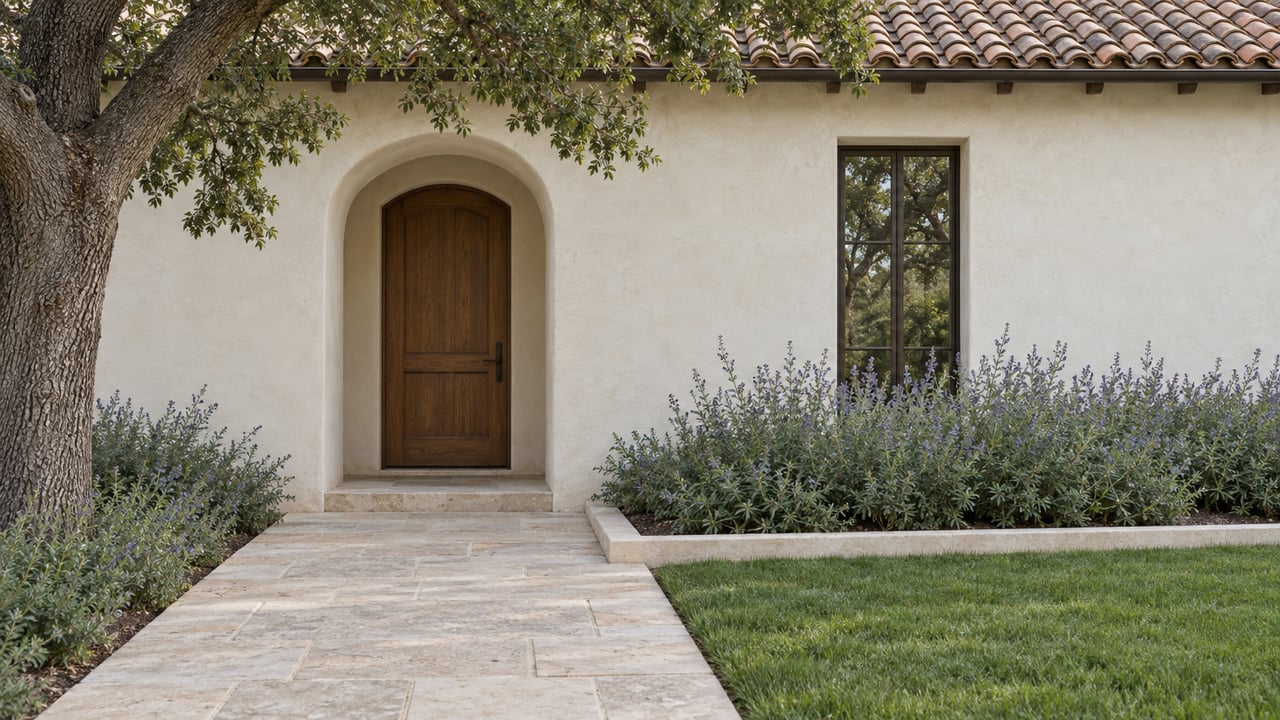
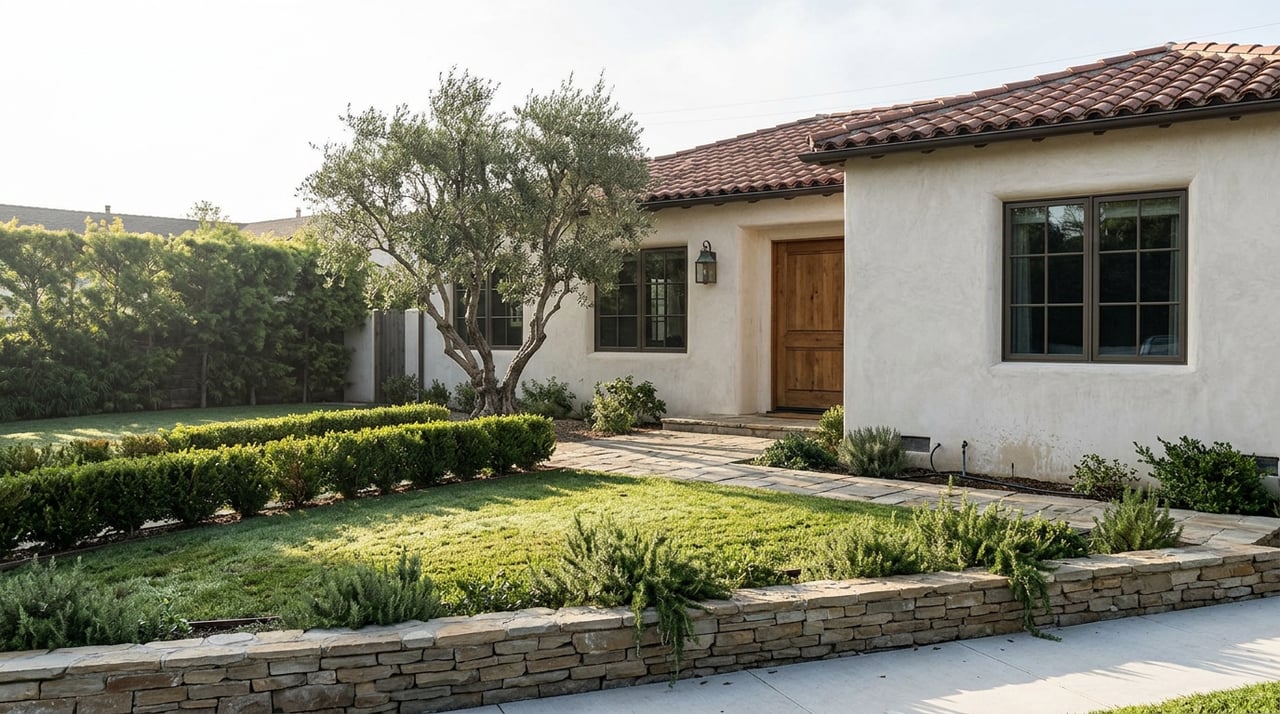
Two ranch homes sit three doors apart on the same street in the Sherman Oaks flats, both built in the 1960s, both on a lot just under 7,000 square feet, both with a detached two-car garage at the end of a long driveway. Both owners converted that garage into livable space years ago. Neither pulled a permit.
One seller found out what that garage was actually worth to her sale before she ever put a sign in the yard. The other found out during escrow, from a buyer's lender, three weeks after opening.
That difference did not come from the construction. It came from timing, and in 2026 the timing question has two new answers pulling in opposite directions at once.
Why this shows up so often in Sherman Oaks specifically
Most of the single-family stock north of Ventura Boulevard, in the flats stretching toward Magnolia and east from the 405 toward Coldwater Canyon, went up between the 1940s and the 1970s as traditional and ranch-style homes on generous lots, often in the 6,500 to 8,000 square foot range, with a detached garage set back from a long driveway. That layout is exactly the kind of space a homeowner converts into a guest room, a home office, or informal rental unit over the decades, usually without anyone filing paperwork with the city.
South of the Boulevard, the terrain climbs into the Santa Monica Mountains and the calculation changes. Hillside lots carry grading rules, potential frontage under the Mulholland Scenic Parkway Specific Plan, and in some cases fire-zone requirements that flat lots never encounter. The legal obligation to disclose an unpermitted conversion is identical on both sides of the street. The cost and complexity of fixing it before you sell is not.
The path that got easier: legalizing before you list
Assembly Bill 2533 took effect January 1, 2025, and changed the math for anyone sitting on an unpermitted garage conversion built before January 1, 2020. Before this law, cities could deny a legalization application outright over code violations that had nothing to do with actual safety. AB 2533 stops that. Local building departments, including the Los Angeles Department of Building and Safety, now have to evaluate a pre-2020 conversion against a health-and-safety checklist rather than a full current-code retrofit, and they cannot charge retroactive impact fees or penalties just for the years the space existed without a permit.
For a seller in the Sherman Oaks flats, that means the conversion your neighbor did in 2017 with a stove and a bathroom added to the old two-car garage has a real, penalty-free route to a Certificate of Compliance now, something that has only existed in this form for the better part of two years.
It is not automatic. A licensed inspector, or a confidential third-party inspection you can request before ever filing with the city, still checks for the basics: smoke detectors, egress, electrical safety, adequate ventilation. If the space clears that bar, the city has to move the application forward. If it does not, you correct those specific items first. Contractors working in Sherman Oaks put a full garage conversion project, permits included, at roughly $84,000 to $273,000 as of March 2026, a range that swings on scope, finishes, and how much correction the space needs before it passes.
The steps look like this in practice:
- Pull your own permit history from the county assessor's office and compare it against what actually exists on the property.
- Request a private, confidential inspection before filing anything with the city, so you know the scope of correction before you commit to a timeline.
- File the AB 2533 application if the conversion predates January 1, 2020. LADBS is required to post its process and checklist publicly.
- Complete only the safety corrections the inspector flags, not a full modern remodel.
- Get your Certificate of Compliance before your listing goes live, so the appraisal and the buyer's lender see a legal unit from day one.
That certificate is the difference between a lender counting your converted garage as square footage and a lender simply not counting it at all.
The path that got stricter: waiting to disclose
Run the same conversion the other direction and the newer law works against you instead of for you. California's Civil Code has always required a Transfer Disclosure Statement on residential sales, and that form has always asked directly whether alterations were made without permits. What changed is how much room a recent owner has to stay quiet about work done since they took title.
Assembly Bill 968, now Civil Code section 1102.6h, took effect July 1, 2024, and expanded disclosure duties specifically for sellers who accept an offer within eighteen months of taking title themselves. If you bought the house, converted the garage, and are now selling within that window, the disclosure standard around that work is tighter than it was two years ago.
The mechanical risk sits inside Civil Code section 1102.3. If a buyer signs an offer and the seller delivers the TDS, or a material update to it, after that signature, the buyer gets the right to cancel within three days if the disclosure was delivered in person, or five days if it came by mail or electronically. Late disclosure of unpermitted work is one of the more common triggers for that clock to start, and it starts at the worst possible moment, after a buyer has already committed emotionally and financially to the deal.
A Transfer Disclosure Statement delivered after acceptance does not just risk an awkward conversation. Under section 1102.3, it hands the buyer a legal off-ramp.
Appraisers add another layer on top of the legal one. Unpermitted square footage is routinely excluded from a formal valuation, which means the buyer's lender may simply refuse to count that converted garage toward the loan amount, regardless of how nicely it is finished. Some lenders will accept a contractor's letter certifying code compliance for minor work. Many will not move forward at all until the space is either legalized or restored to its original, unpermitted-but-disclosed condition.
Two sellers, two outcomes
| Legalize before listing (AB 2533 path) | Disclose and price as-is | |
|---|---|---|
| Timeline before you can list | Roughly 2 to 6 months for the amnesty inspection and correction cycle | Immediate, no construction delay |
| What the buyer's lender sees | Legal square footage, full appraisal credit | Unpermitted space, likely excluded from valuation |
| Disclosure timing risk | Minimal, the TDS reflects a legal condition | High if disclosure is delayed past offer acceptance |
| Buyer pool | Full range of financed and cash buyers | Narrower, often cash-heavy or investor buyers |
| Cost | Permit fees plus any required corrections | No direct cost, but expect price adjustment in negotiation |
Neither path is universally correct. A seller with a straightforward, safety-passing conversion built well before 2020 and enough runway before listing gains the most from legalizing first. A seller who needs to move quickly, or whose conversion has deeper structural issues, may be better served pricing the home honestly as-is and disclosing early and in writing, well before any offer is signed rather than after.
What this means if you are deciding right now
Sherman Oaks has stayed a tight market through 2026, with limited active inventory and well-priced homes still moving quickly. That is precisely the environment where getting this decision backward costs you the most. A buyer with other options does not have to be patient with a disclosure that shows up mid-escrow, and a lender working through a thin approval pipeline will not make exceptions for a garage that was supposed to be a bonus room.
The conversion itself is rarely the problem. The problem is deciding, without a clear read on your own timeline and the age of the work, whether you are the seller who legalizes before the sign goes up or the seller who discloses early and prices accordingly. Get that sequencing wrong and the surprise lands in someone else's hands at the worst possible moment.
A few questions worth asking before you list
Does the AB 2533 amnesty apply if I did the conversion myself last year? No. The amnesty path under AB 2533 only applies to units built before January 1, 2020. A conversion completed after that date does not qualify, and if you have owned the property less than eighteen months, AB 968's expanded disclosure rules apply on top of the standard TDS requirement.
What if I genuinely do not know when the garage was converted? Pull the county assessor's records and any available permit history first. Utility connection dates, prior listing descriptions, and dated photographs can help establish a timeline. If you cannot determine the age of the work with confidence, treat it as recent for disclosure purposes and consult a real estate attorney before listing.
Does the hillside side of Sherman Oaks face different rules for legalizing a conversion? The disclosure law is the same on both sides of Ventura Boulevard. What differs is the engineering. Hillside lots south of the Boulevard often require additional grading and structural review that flat lots do not, which can extend the AB 2533 timeline even when the underlying safety checklist is the same.
If you are weighing whether to legalize a conversion before listing or price your Sherman Oaks home honestly as-is, that decision deserves a conversation grounded in your specific timeline, your specific lot, and your specific buyer pool, not a generic checklist. Ingrid Sacerio works these decisions with sellers across Sherman Oaks and the surrounding Valley every day. Schedule a Private Consultation to talk through what your garage is actually worth to your sale, and what it will take to get there.